

Our Austin Winter Condo Maintenance Checklist
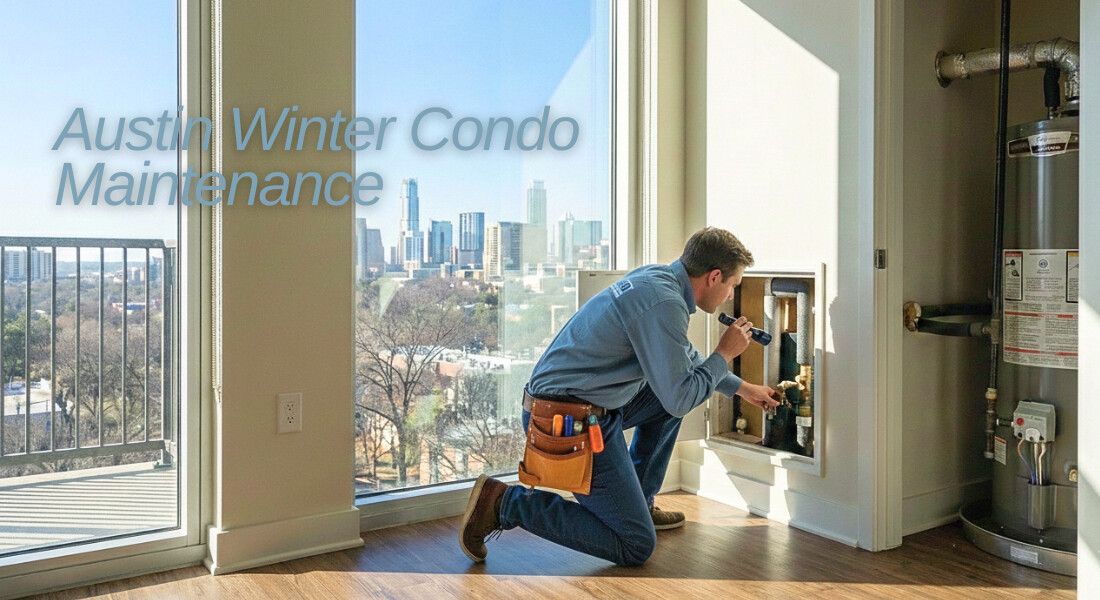
A winter condo maintenance checklist matters more than you might expect as an Austin condo owner. Central Texas winters are generally mild, but freeze events are becoming more common.
The February 2021 storm changed how owners, HOAs, and insurers think about winter readiness. Pipes burst. Buildings lost power. Repairs dragged on for months.
Your condo carries a different risk profile than a single-family home. Shared systems mean shared consequences. A failure outside your unit can still damage everything inside it. The Texas Department of Insurance continues to report plumbing losses as the top winter claim category statewide.
This post explains how to prepare your Austin condo for winter and where to focus your attention.
Downtown Austin Real Estate Market Watch
In December 2025, homes in Downtown Austin took an average of 126 days to sell. However, Austin real estate trends shift frequently. Reach out to the Capital Downtown Realtors® team for expert help with buying or selling in Austin.
Austin Winter Condo Maintenance Checklist
How Austin’s Winter Climate Affects Condo Buildings
Austin winters usually stay above freezing. Sudden cold snaps now disrupt that pattern more often. Climate data shows increasing temperature volatility across Central Texas.
Heat was the primary concern when designing most Austin condo buildings. Cold weather creates stress points. Many condo buildings place plumbing in exterior walls. Short freezes can cause damage faster than prolonged cold in northern climates.
Understanding Your Responsibility vs the HOA’s Role
Condo ownership splits maintenance responsibility between you and the HOA. Exterior systems usually fall under HOA control. Interior components typically remain your responsibility.
You should review your governing documents before winter. Any misunderstanding during freeze-related damage delays repairs. Delays often increase repair costs and the likelihood of insurance disputes.
Plumbing Protection Inside the Condo Unit
Plumbing failures create the most winter damage claims in Texas. Interior pipes near exterior walls freeze first. Water heaters in unconditioned closets remain vulnerable.
Austin Water recommends maintaining indoor heat above 55 degrees during freezes. Cabinet doors under sinks should remain open. Dripping faucets reduce pressure buildup during extreme cold.
Building Systems That Can Still Affect Your Interior
Exterior maintenance directly affects your unit’s risk. Roof drainage failures lead to ceiling leaks. Blocked gutters push water behind walls.
Balcony drains clog easily during freezes. Frozen water expands. Expansion forces moisture into framing and drywall. You should report exterior drainage concerns early.
Heating Reliability During Cold Snaps
Many Austin condos rely on heat pumps. Heat pumps lose efficiency below freezing. Backup heat strips increase electrical demand during peak usage.
Replace filters before winter begins. Dirty filters strain the system. Keep thermostat settings consistent during cold periods.
Power Outages and Electrical Readiness
ERCOT winter demand spikes still pose an outage risk. Condo buildings often restore power more slowly than single-family homes. Shared electrical rooms might limit repair teams’ access.
Locate your electrical panel in advance. Surge protectors help after outages. Battery backups support internet access, alarms, and medical equipment.
Windows, Doors, and Moisture Control
Drafts increase heat loss and the risk of condensation. Sliding glass doors remain a common weak point in Austin condos. Sun exposure degrades weather stripping faster.
Cold-weather condensation can lead to mold. Bathroom exhaust fans should vent outdoors. Indoor humidity should stay below 50 percent.
Fireplaces, Gas Systems, and Safety Checks
Some condos allow fireplace use. Chimneys still require inspection. Blocked vents raise carbon monoxide risk.
Texas law requires carbon monoxide detectors in applicable units. Test detectors before winter. Know the gas shutoff location in advance.
Insurance Preparation Before Temperatures Drop
Condo insurance often excludes exterior systems. HO-6 policies cover interior damage. Loss assessment coverage helps when HOAs issue special assessments.
Photograph your unit before winter. Documentation speeds claims after widespread events. Texas insurers often enforce strict reporting deadlines.
Questions to Ask Your HOA Before the First Freeze
Confirm winterization work completed since 2021. Pipe insulation upgrades matter. Generator access affects elevators and water pressure.
Emergency communication plans should be clear. The community should document maintenance response timelines. Reserve funding impacts repair speed after freeze damage.
Common Winter Maintenance Questions from Austin Condo Owners
Do condo HOAs in Austin handle frozen pipes?
HOAs usually handle common plumbing lines. Interior pipe damage often remains the owner’s responsibility.
What temperature prevents pipes from freezing?
Most experts recommend keeping indoor temperatures above 55 degrees during freeze events.
Are newer Austin condos safer during winter?
Newer buildings often perform better. Design choices and maintenance still matter more than age alone.
Can winter damage affect resale value?
Yes. Buyers now ask about winter readiness. Lenders review HOA maintenance history more closely.
Navigate the Austin Condo Market With Confidence
Winter readiness protects your comfort, finances, and resale value. Condo ownership requires understanding how buildings perform under stress.
Capital Downtown Realtors® works with Austin condo buyers to learn about how well communities respond to these issues.
If winter preparedness is part of your condo plans, connect with us today for guidance grounded in Austin market realities.